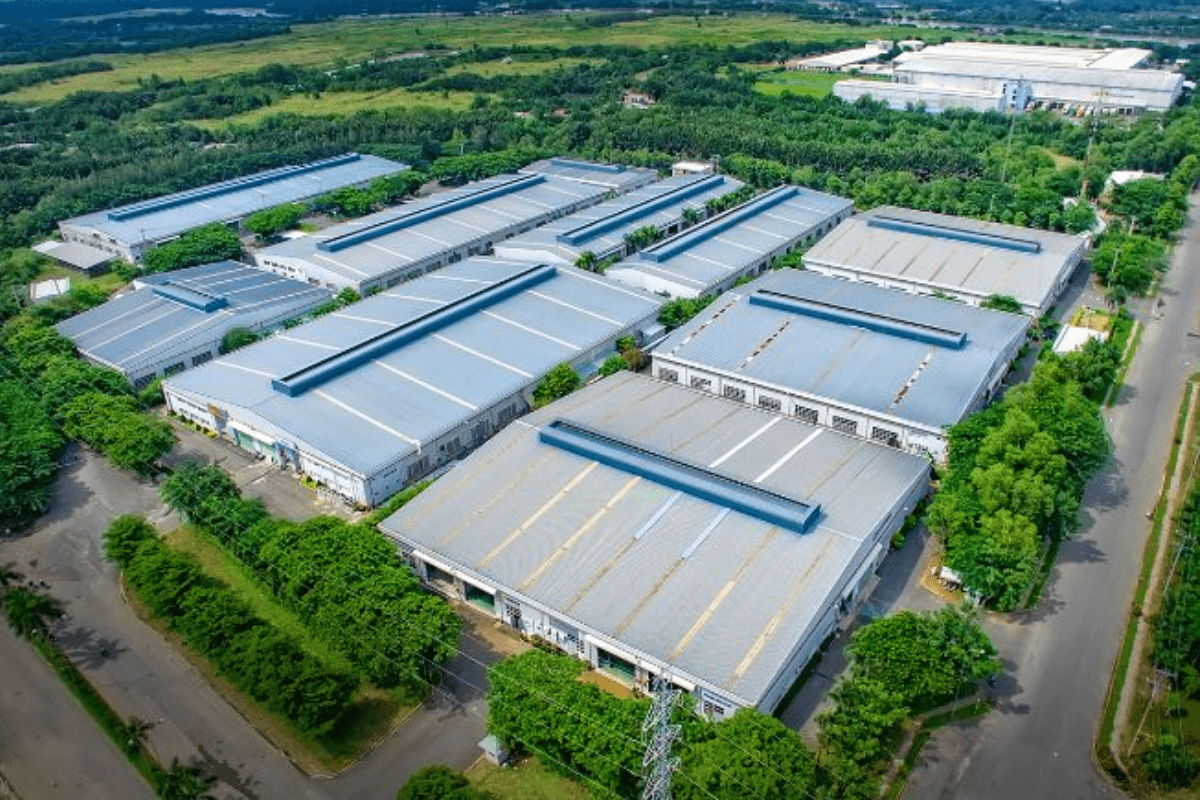
The Mekong Delta, Vietnam’s most fertile agricultural region, is making a significant shift towards green agriculture to align with global trends and mitigate the severe impacts of climate change, such as droughts, floods, and landslides. This transition not only helps reduce negative environmental impacts but also enhances the quality and value of agricultural products, contributing to sustainable development. This is a crucial step in adapting to and addressing current challenges.
Reasons for the Mekong Delta’s shift to green agriculture
The Mekong Delta is heavily impacted by climate change, facing challenges such as droughts, floods, riverbank and coastal erosion, and increasingly extreme weather events. Agriculture, the backbone of the region’s economy, is not immune to these effects. Thus, to reduce emissions and protect the environment, the southwestern provinces are gradually transitioning to green and sustainable agricultural practices.
Additionally, Vietnam has committed to achieving net-zero carbon emissions by 2050, demonstrating its responsibility to the international community and its orientation towards sustainable economic development. This commitment opens up new business opportunities, especially in carbon credit trading, and meets the growing demand for green products among consumers. Green agriculture not only mitigates climate change impacts but also generates economic value from environmentally friendly products.
Some new manufacturing models being applied recently
Several green agricultural models are actively being implemented by residents of the Mekong Delta, replacing traditional farming practices.
The “rice fields, flower banks” model
The ecological “rice fields, flower banks” model is being widely applied in provinces like Soc Trang, Hau Giang, and An Giang with high effectiveness. Previously, farmers used to burn rice straw after harvest, causing environmental pollution. Now, instead of burning, straw is used to grow mushrooms, make organic fertilizers, or feed livestock, reducing greenhouse gas emissions and increasing farmers’ income.
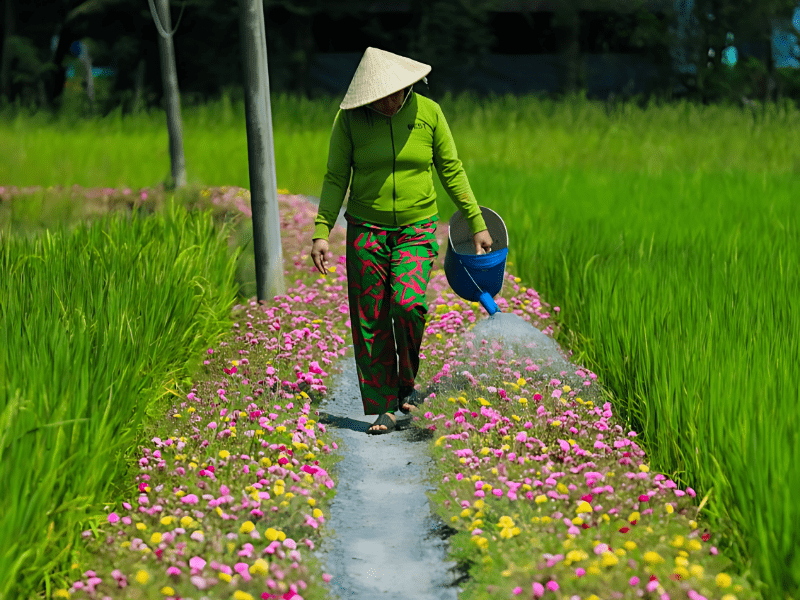
This model maintains a balance between harmful pests and beneficial organisms, reducing pesticide use by over 50%, saving costs, and increasing profits for rice farmers. To date, nearly 40,000 hectares of rice in the Mekong Delta have been cultivated under the “rice fields, flower banks” model, with products being secured by enterprises, meeting the growing demands of both domestic and export markets.
The government’s role in promoting green agriculture
An Giang is implementing the “Sustainable Development of One Million Hectares of High-Quality, Low-Emission Rice Linked to Green Growth” scheme. The scheme aims to create a large, specialized rice-growing area that reduces greenhouse gas emissions and reorganizes the production system along the value chain. By 2030, An Giang aims to achieve 152,198 hectares of high-quality, low-emission rice, with strong links between farmers, cooperatives, and enterprises.
The government’s role in promoting green agriculture
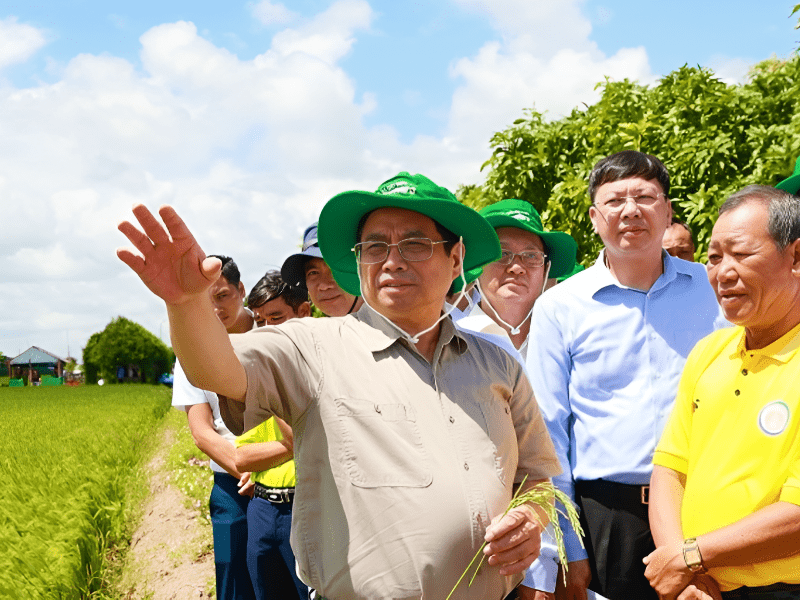
The government plays a crucial role in promoting green agriculture in the Mekong Delta through various support policies for farmers and businesses related to manufacturing model transformation. Training programs, financial, and technical support have facilitated farmers’ access to and adoption of new manufacturing methods. Additionally, the development of green agricultural value chains, from production to consumption, is being vigorously promoted to ensure that green agricultural products are widely consumed in the market.
The government also encourages businesses to invest in green agriculture, expand markets, and enforce strict regulations on the use of harmful chemicals. Collaboration between farmers and businesses in cooperatives and production groups has facilitated the wide consumption of clean agricultural products, enhancing value and profits. In summary, government support not only helps farmers overcome initial difficulties but also motivates long-term sustainable development.
Conclusion
The Mekong Delta is making a determined shift towards green agriculture. Efforts to transition farming models, government support, and the creativity of farmers all contribute to a sustainable and environmentally friendly agricultural sector. Despite the challenges ahead, with the right direction and close cooperation, green agriculture in the southwestern provinces promises to bring long-term benefits to the region and the entire country.
Source: Compilation