
After a rigorous evaluation by the expert panel, the Green Innovation Accelerator (GI Accelerator) 2025 officially announces the Top 20 Green Innovation Enterprises of the year. These outstanding businesses have introduced breakthrough solutions, making significant contributions to the green transition and sustainable development journey.
TRACK 1: WASTE MANAGEMENT & CIRCULAR ECONOMY
1. BioPhenolics Inc. (Japan)
A pioneer in bio-based phenol production – a key ingredient in plastics, electronics, and pharmaceuticals. BioPhenolics has developed advanced fermentation technology using non-edible biomass, reducing CO₂ emissions by up to 89% compared to petrochemical alternatives. With a “drop-in” strategy, their products can directly replace conventional phenol without altering existing supply chains – a major leap in greening the global chemical industry.
2. Terracle (South Korea)
Terracle develops chemical recycling technology for PET and hard to recycle plastics, converting waste into high-quality materials such as TPA used in textiles, electronics, and packaging. Their low-energy process reuses solvents and generates less than 4% waste. With plans to scale commercially by 2025, Terracle is helping make “plastic without pollution” a reality.
3. CyanDuck® Electric Garbage Vehicle (MAB Vietnam)
CyanDuck introduces a compact electric garbage truck tailored for narrow alleys – which account for up to 70% of urban waste in Vietnam. Featuring three waste-separation bins, the product enhances collection efficiency, reduces labor by 50%, and doubles productivity. With patents in seven countries and partners such as URENCO, HTX Thành Công, and Vân Khánh Group, CyanDuck is set to expand across Asian urban markets.
4. Kloss Solution (Singapore)
Kloss developed Singapore’s first reusable dental floss holder, reducing plastic waste by up to 95% compared to disposable floss. The eco-friendly “Click & Use” product is refillable and user-friendly. With a subscription model and brand placement in dental clinics, Kloss is transforming oral hygiene into a sustainable habit.
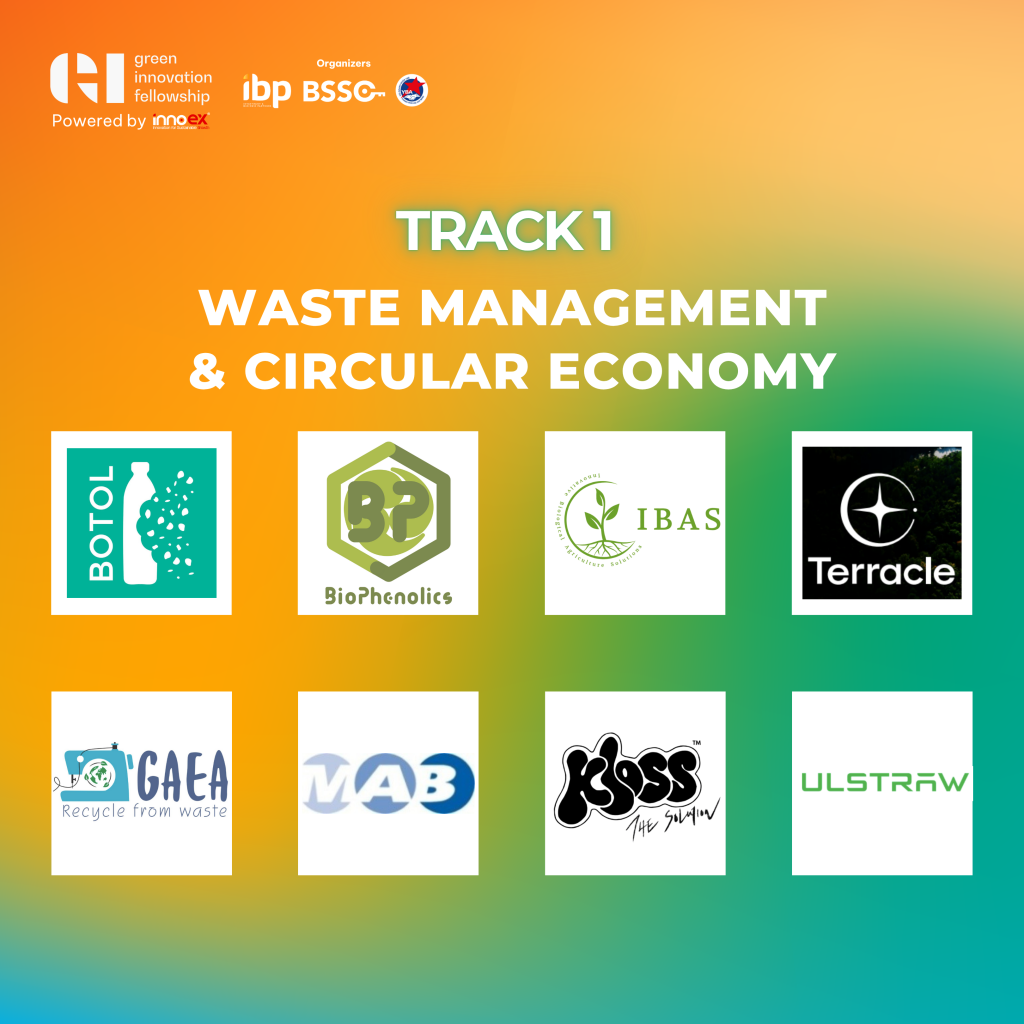
5. Botol Vietnam (Vietnam)
BOTOL builds Vietnam’s first smart Reverse Vending Machine (RVM) network for plastic bottle collection. Integrated with a rewards app, on-site sorting, and outdoor advertising, BOTOL already operates over 40 machines at AEON, Mega Market, universities, and with partners like Coca-Cola and TetraPak. They aim to roll out 500 machines nationwide, promoting a culture of smart recycling in urban areas.
6. IBAS (Vietnam)
IBAS offers eco-friendly microbial solutions for aquaculture, agriculture, and industry. Their PSB (Photosynthetic Bacteria) technology improves wastewater quality and enhances livestock resistance and productivity – all without chemicals. Through its Eco-Farm model, IBAS is helping green the supply chain from the source.
7. Ulstraw (Vietnam)
ULSTRAW manufactures eco-friendly fire starters from rice straw – an agricultural byproduct often burned and a source of air pollution. Their product burns cleanly, produces no smoke, is moisture-resistant, and environmentally friendly. With successful trial sales in the U.S. via Amazon, ULSTRAW plans to launch six new product lines by 2026, aiming to become a global leader in green fire starters.
8. GAEA (Vietnam)
GAEA upcycles event tarpaulins – often discarded after use – into handcrafted recycled gifts, while also organizing DIY workshops for tourists. Operating as a social enterprise, GAEA provides livelihoods for disadvantaged women. Evolving from manual sewing, the company has expanded into B2B, partnering with JW Marriott, UNDP, GreenHub, and others. With its “Happy Enterprise” model, GAEA is on track to become Vietnam’s leading brand for upcycled corporate gifts.
TRACK 2: SUSTAINABLE AGRICULTURE
9. N&E Innovation (Singapore)
N&E Innovation introduces Vikang, an antibacterial technology derived from food waste, to create chemical-free post-harvest solutions and sustainable packaging. By extending the shelf life of fruits, meat, and vegetables up to 2x, the company aims to green the entire ASEAN agri-value chain – from farm to supermarket – while reducing up to 35,750 kg of CO₂ emissions per year.
10. GreenPod Labs (India)
GreenPod Labs develops active packaging solutions infused with plant-based compounds that extend the shelf life of fruits like mangoes, grapes, and avocados by 40–80% under ambient conditions. By combining plant biotechnology with AI-powered seasonal data analysis, this startup tackles India’s $12 billion post-harvest loss problem with a scalable, tech-driven solution.
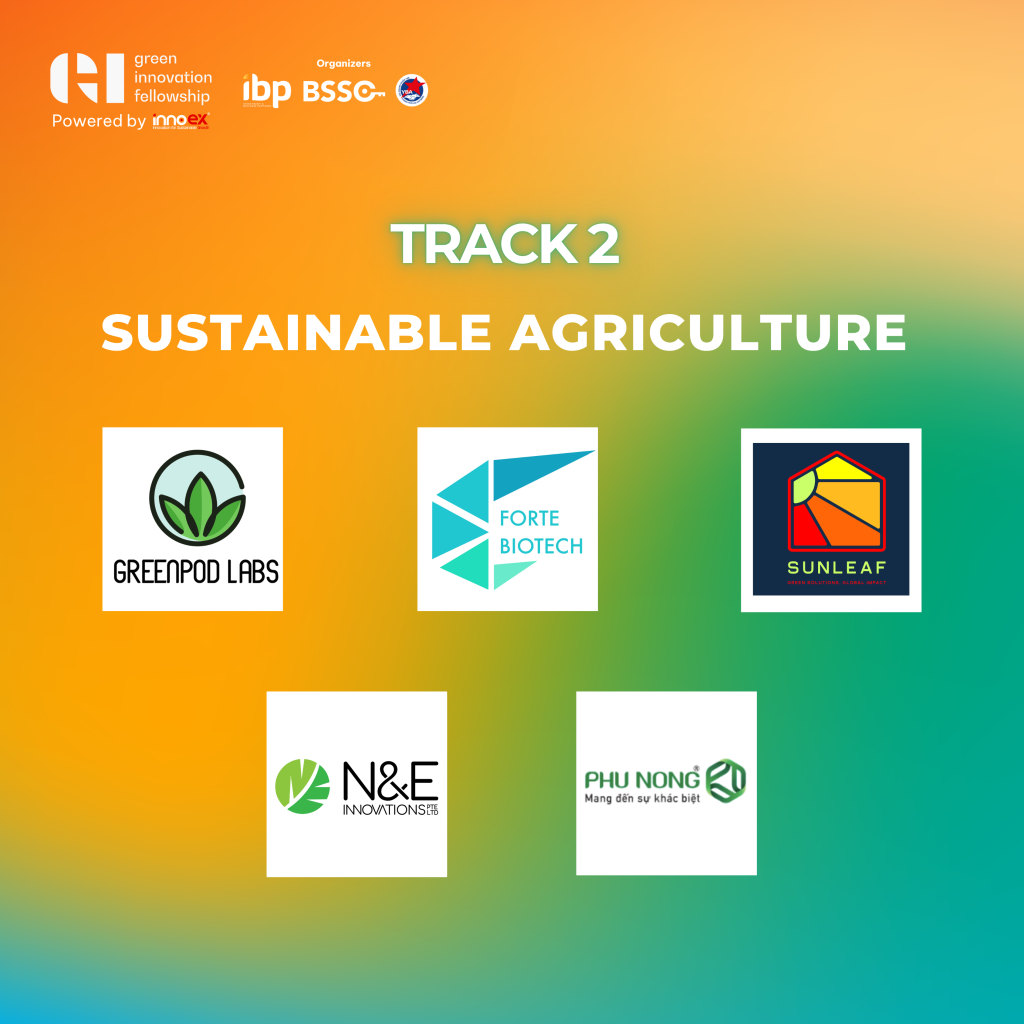
11. SunLeaf Innovation (Vietnam)
SunLeaf Innovation pioneers a circular agriculture ecosystem in Vietnam, offering a suite of solutions from organic residue composting, biological pest control, to soil regeneration and yield enhancement. Leveraging Japanese technologies and research on nano silver–herbal compounds, SunLeaf helps farmers cut 50% of cultivation costs and reduce chemical residues by up to 70%.
12. Forte Biotech (Singapore)
Forte Biotech has developed RAPID – an on-site biological diagnostic kit that enables shrimp, pig, and poultry farmers to detect diseases in just 1 hour, compared to 1–2 days with traditional PCR. Already deployed across 80+ farms in Southeast Asia, RAPID boosts profits by 2.5x, reduces sanitation cycles by 86%, and lowers antibiotic use and carbon emissions significantly.
13. Nong Li Fu (Taiwan)
Nong Li Fu pioneers the development of biological adhesives made from used cooking oil and biomass byproducts, applied in agricultural products like insect traps, sticky boards, and rodent glue. Their proprietary technology enables production costs 58% lower than petrochemical adhesives, with 100% biodegradability – aligned with the global supply chain’s push toward zero carbon by 2030.
TRACK 3: SUSTAINABLE DEVELOPMENT TECHNOLOGY (ESG – ENERGY – CLEAN TECHNOLOGY)
14. REGreen Solution – CAS Energy (Vietnam)
REGreen Roof develops eco-roof systems that integrate solar panels with natural cooling technology, reducing rooftop temperatures by up to 40% and lowering cooling energy consumption by up to 30%. Designed for tropical urban environments, this solution not only greens living spaces but also extends the lifespan of buildings.
15. WeavAir (Canada)
WeavAir offers a SaaS platform that enables businesses to measure, analyze, and optimize carbon emissions in line with ESG standards. Utilizing AI for climate risk forecasting, the platform accelerates investment decision-making and reduces operating costs by up to 40%. WeavAir has been piloted with over 20 global financial institutions.
16. Ecotek – CityOS (Vietnam)
Ecotek is building CityOS, a smart city operating system that integrates services such as asset, energy, traffic, and resident management. With real-time data processing and urban policy recommendations, CityOS is currently deployed in Ecopark and is poised for nationwide expansion across Vietnam.

(ESG – Energy – Clean Technology)
17. MaxDream (Vietnam)
MaxDream owns CDIs water filtration technology, offering ultra-efficient purification that uses 50–90% less electricity and saves up to 80–90% water compared to traditional RO systems. Adaptable for households and industrial plants alike, MaxDream is expanding into industrial and international markets.
18. Cenergy Vietnam JSC (Vietnam)
Cenergy is developing Redox Flow Battery (RFB) storage technology – a safe, 25-year-lifespan, non-flammable alternative to lithium batteries. The company aims to build Vietnam’s first domestic RFB supply chain to meet the country’s growing renewable energy storage needs.
19. Niion Biomass Energy (Vietnam)
Niion transforms agricultural waste like rice husks, sawdust, and sugarcane pulp into biomass pellets as a clean industrial fuel alternative to coal. With a capacity of over 1,000 tons/year and EU export-grade standards, Niion targets reducing 18,000 tons of CO₂ emissions annually and enabling a circular agriculture value chain.
20. GovernClimate (Taiwan)
GovernClimate develops GetEmission, a carbon management & audit SaaS platform compliant with ISO 14064 and 14067. Already deployed in universities, manufacturers, and cities across Japan and Taiwan, the platform reduces reporting time by 70% and prepares businesses for CBAM and Net-Zero regulations.
The Journey Ahead for the Top 20
The Top 20 Green Innovation Accelerator 2025 cohort not only represents Vietnam’s commitment to Net Zero but also acts as a vanguard force transforming the sustainable business landscape across Vietnam and the region.
In the next phase, these teams will undergo in-depth interviews to select the Top 5 finalists, who will officially pitch their solutions at InnoEx 2025 – a premier gathering of investors, experts, and corporate partners from Vietnam and beyond.
We believe that each step these innovators take is not just a leap forward for one enterprise, but a collective stride for the entire green innovation ecosystem.